
Barry Melrose Net Worth: The Hockey Legend's Surprising Fortune

If you’ve ever watched NHL hockey, you know the name Barry Melrose. He’s the guy with the electrifying mullet, the booming voice, and the encyclopedic hockey mind that made him a staple on ESPN for decades. But beyond the pucks and the highlights, there’s a quieter question that fans love to ask: just how much is the Barry Melrose net worth these days?
Spoiler alert: it’s a lot more than you’d guess for a guy who didn’t win a Stanley Cup as a coach. But the numbers tell a story of grit, longevity, and some seriously smart career pivots. Let’s drop the puck on the surprising fortune of a true hockey legend.
The Net Worth Number: Real Talk
According to the latest estimates, Barry Melrose’s net worth hovers around $6 million. That’s not “buy an island” money, but for a former player, coach, and broadcaster who never landed a mega-billion-dollar endorsement deal, it’s a rock-solid pile of cash.
Must Read
To put it in perspective: it’s roughly the same as a mid-tier NHL player’s career earnings — except Melrose earned it over four decades. That’s the difference between a flash in the pan and a steady flame.
Fun fact: In 1993, Melrose took the Los Angeles Kings to the Stanley Cup Final with a rookie named Wayne Gretzky. His salary as head coach? A modest $250,000 per year. Compare that to today’s average NHL coach at $2 million, and you realize how much the game — and his bank account — has changed.
Practical tip: Melrose’s net worth is a masterclass in “delayed gratification.” He didn’t cash in early; he built a brand over time. Ask yourself: are you playing the short game or the long game with your career?
The Journey: From Mullet to Millions
Barry Melrose didn’t grow up in a mansion. Born in 1956 in Kelvington, Saskatchewan, he was a Canadian farm kid who learned to skate on a frozen slough. His first NHL contract with the Winnipeg Jets in 1979 paid him about $70,000—decent money, but not life-changing.

His playing career was solid, not spectacular: 300 NHL games, 150 points, and a reputation as a tough, no-nonsense defenseman. But here’s where the magic happened: Melrose understood that hockey knowledge was his golden ticket. After retiring in 1988, he transitioned into coaching, then quickly into broadcasting.
That move is the real reason his net worth is where it is today. ESPN hired him in 1996, and he became the network’s most recognizable hockey voice. For over 25 years, he broke down plays, predicted games, and wore that signature leather jacket like a second skin. That’s consistent, high-demand work that keeps the checks coming.
Cultural reference: Think of Melrose as the hockey equivalent of John Madden—a larger-than-life personality who turned niche expertise into a household name. Madden’s net worth peaked at $200 million; Melrose’s is a fraction of that, but the strategy is identical.
Reflection: Most of us chase the big flashy job. Melrose proves that becoming the go-to expert in your field—even if it’s not the most glamorous—can build a fortune that lasts longer than a home run.
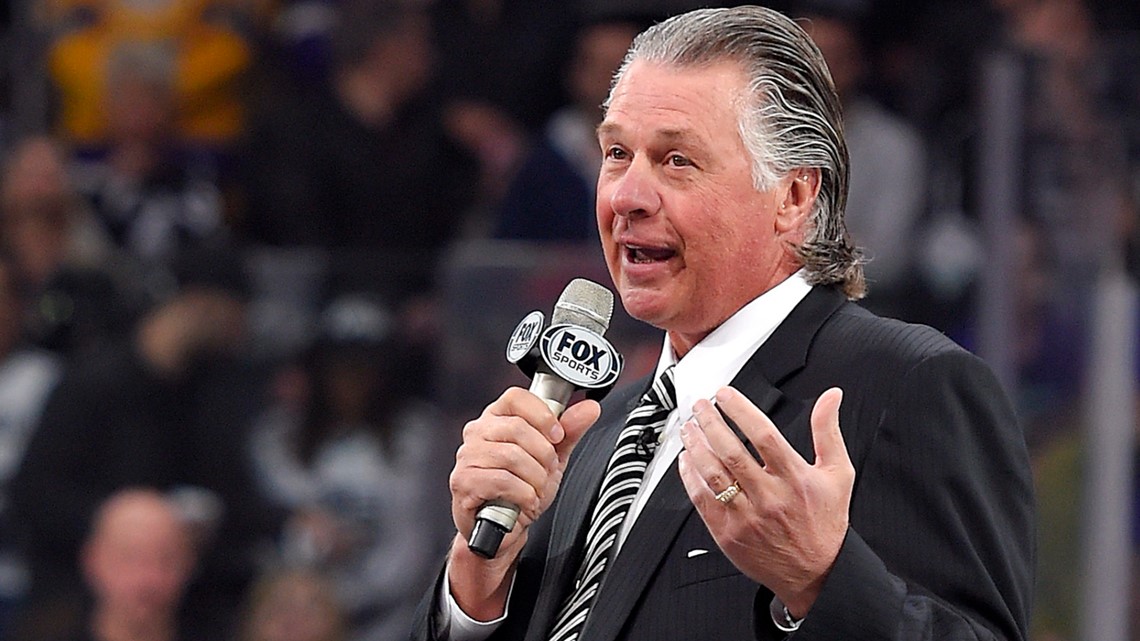
Where Did the Fortune Come From?
Let’s break it down. Melrose’s primary income streams look like a portfolio you’d study in business school: broadcasting salary, coaching salary, speaking engagements, and a few well-timed media appearances.
Broadcasting is the big one. At his peak with ESPN, Melrose reportedly earned between $500,000 and $800,000 per year. That’s not Stephen A. Smith territory ($12 million), but for a hockey analyst? It’s top-tier. He also did color commentary for NBC and the NHL Network, stacking those checks like a pro.
Coaching added another layer. Besides the Kings, he coached the Tampa Bay Lightning in 1998-99 for a salary around $400,000—and while his tenure was short, it padded the résumé and the net worth. Add in corporate speaking fees (easily $15,000 to $30,000 per event) and a few book royalties, and you’re looking at a man who never stopped working.
Fun fact: Melrose’s mullet isn’t just a hairstyle—it’s a brand asset. In 2013, he shaved it off for charity, raising $20,000 for the Jimmy Fund. That kind of visibility keeps him relevant and monetizable even when he’s off-air.

Practical tip: Create multiple income streams. Melrose didn’t rely on one job; he combined salary, freelancing, and personal brand. Start a side hustle, even a small one. It adds up faster than you think.
The Hidden Costs: Health and Heart
Here’s where the story gets real. In 2023, Melrose revealed he had been diagnosed with Parkinson’s disease and was stepping back from broadcasting. That news shook the hockey world—but it also highlighted a key point: his net worth isn’t just money; it’s freedom.
With a $6 million portfolio, Melrose can afford top-tier medical care, supportive housing, and time with his family. He’s not forced to work through a debilitating condition; he can prioritize his health. That’s the ultimate luxury.
Think about it: how many people have to keep working long past their capacity because they didn’t build the cushion? Melrose did. He saved, invested, and stayed disciplined. His net worth is a safety net, not just a scoreboard.

Cultural reference: Remember the movie Moneyball? Billy Beane says, “Adapt or die.” Melrose adapted from player to coach to broadcaster to retiree—and his finances adapted with him. That’s a winning strategy in any league.
What We Can Learn from the Mullet Man
Barry Melrose’s net worth of $6 million isn’t a headline; it’s a roadmap. He didn’t win the lottery. He didn’t get a single massive contract. He just put in the work for 45 years, then stayed likeable while doing it.
Here’s the takeaway for your daily life: consistency beats intensity every time. Melrose never had a breakout year that made him a billionaire. But he showed up, did the job better than most, and made sure people remembered him (thank you, mullet). That’s the difference between a good income and a great net worth.
So, next time you’re optimizing your budget or thinking about a career change, channel your inner Barry. Ask yourself: am I building something sustainable? Am I becoming the expert that people trust? And am I having fun while doing it?
Final reflection: Hockey fans remember Melrose for the mullet, the passion, and the voice. But his fortune? That’s a legacy of smart choices. In life, we don’t always get a power play—but if we keep skating, the puck eventually goes in the net. And that, my friends, is worth more than any dollar figure.